

The 16 Steps of Ajrakh: How We Create Magic on Modal Silk
Understanding Ajrakh: More Than a Pattern
Ajrakh is one of the world's oldest textile printing techniques, with roots tracing back over 500 years to the Indus Valley. The word "Ajrakh" comes from the Arabic word "Arqaa," meaning to imprint or stamp. What makes Ajrakh unique is not just the intricate geometric patterns, but the complex chemistry of natural dyes, resist-dyeing techniques, and master craftsmanship.
Unlike mass-produced prints, authentic Ajrakh cannot be replicated by machines. Each piece carries the unique fingerprint of the artisan who created it. When you wear an authentic Ajrakh modal silk saree, you are wearing history, art, and the dedication of generations of master craftsmen.
The 16-Step Ajrakh Creation Process
Stage 1: Fabric Preparation (Steps 1-2)
Stage 2: Natural Dyeing Foundation (Steps 3-5)
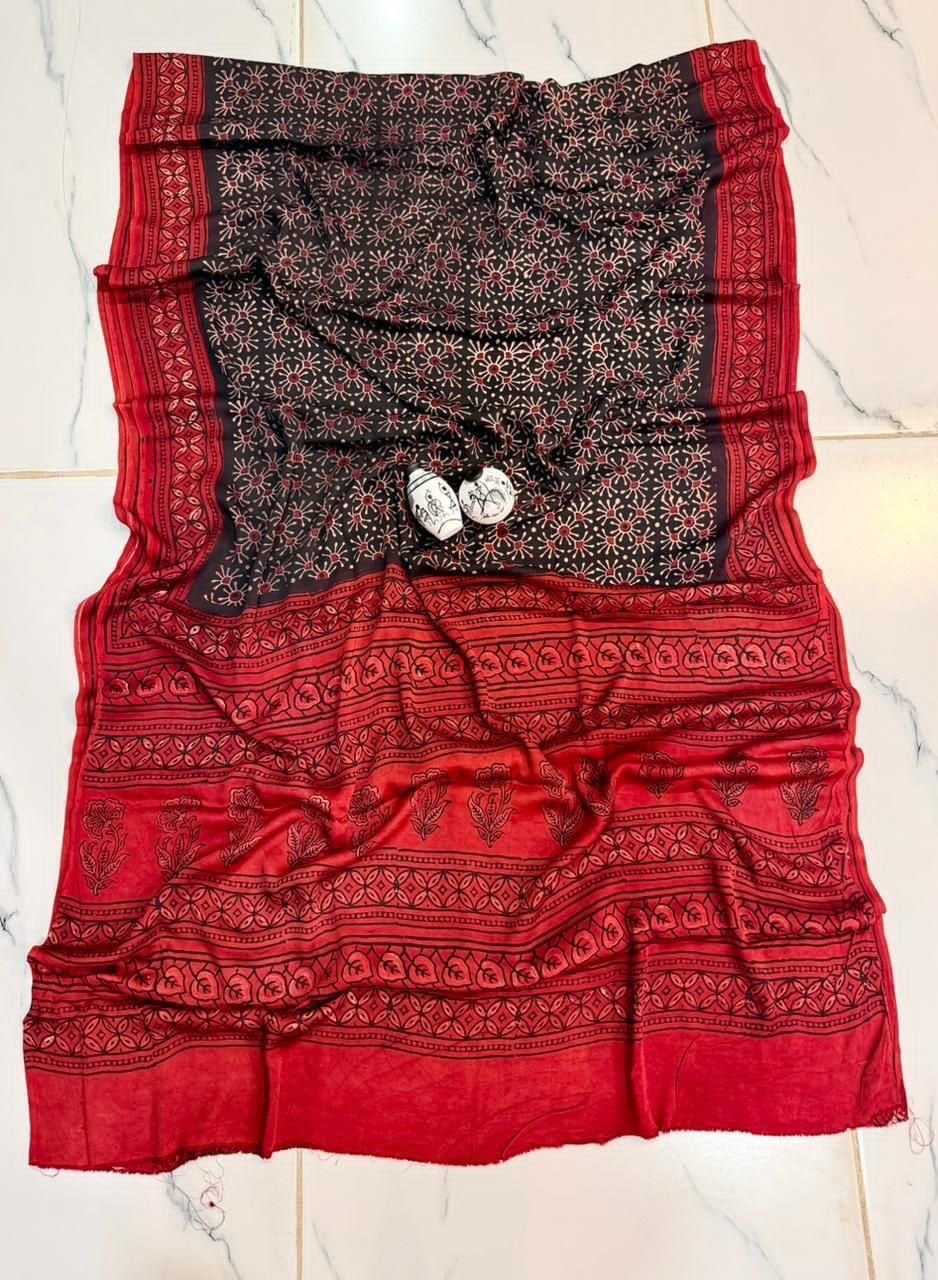
Hand block printed Ajrakh using natural madder root creates rich, earthy reds that cannot be achieved with synthetic dyes
Stage 3: Resist Printing (Steps 6-9)
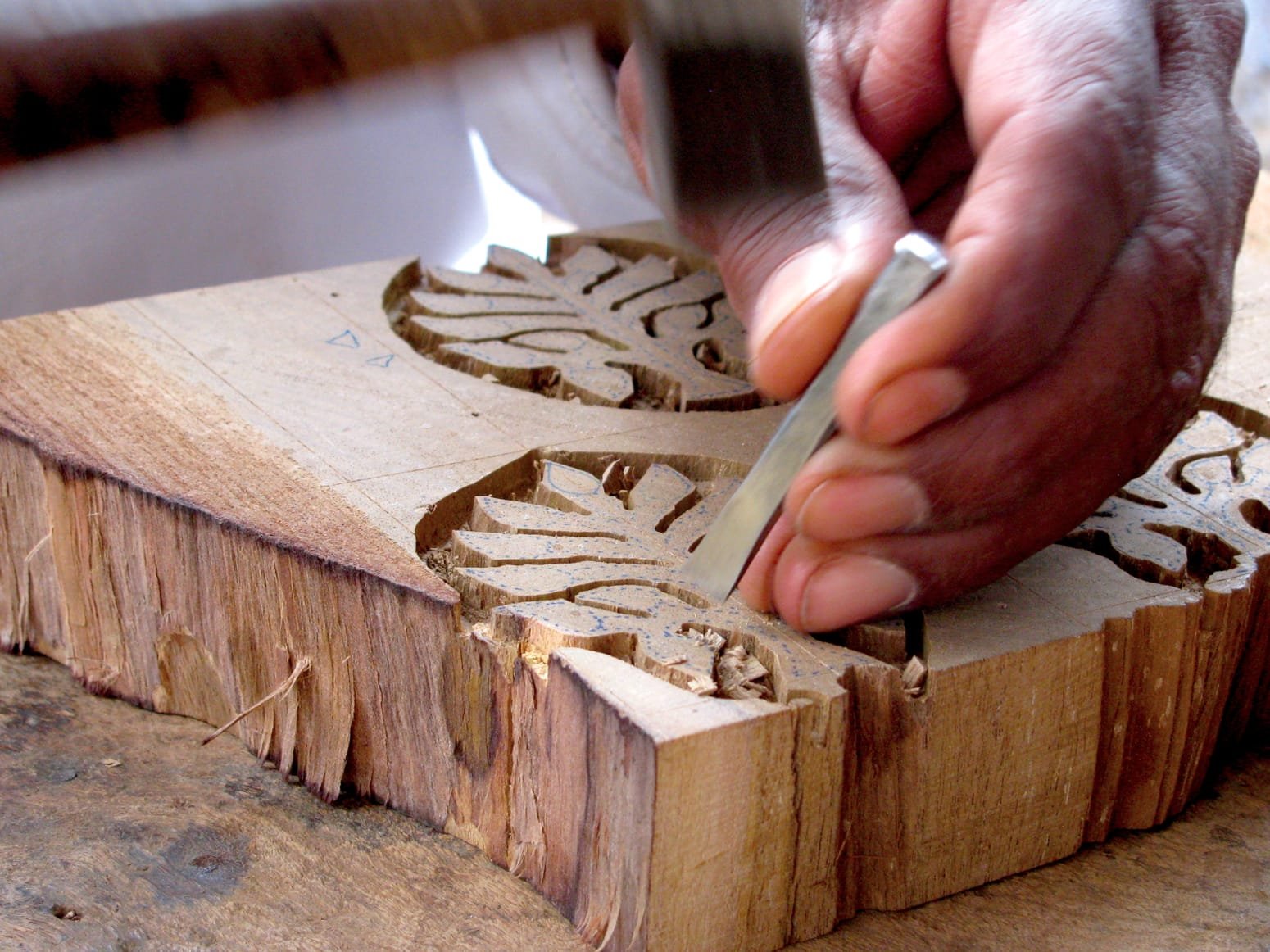
Master artisans hand-carve each printing block with extraordinary precision and detail
Stage 4: Natural Color Enhancement (Steps 10-12)
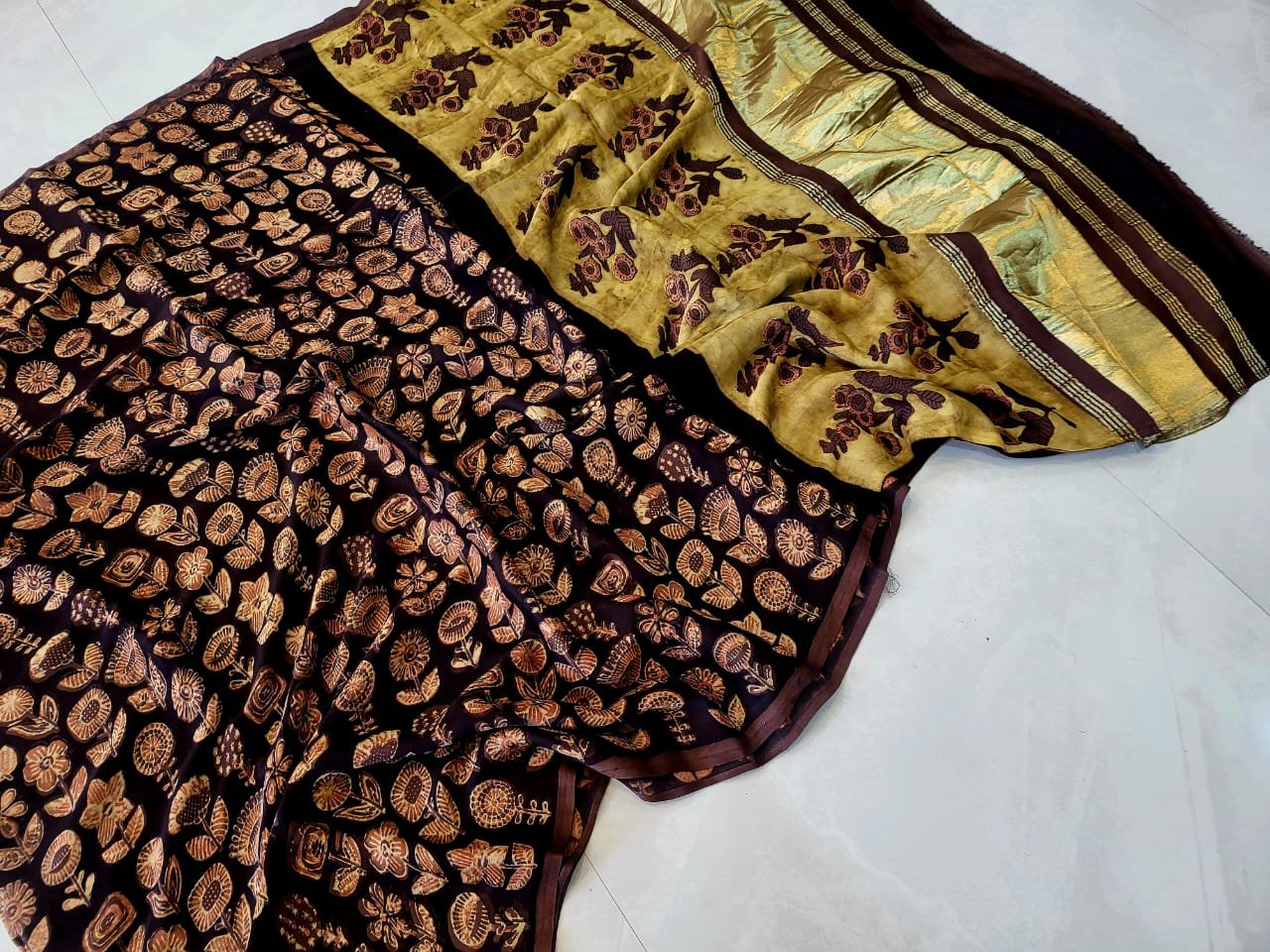
The lagadi patta border showcases the intricate hand block printing and natural color variations unique to authentic Ajrakh
Stage 5: Resist Paste Removal & Washing (Steps 13-14)
Stage 6: Final Finishing (Steps 15-16)
Why Modal Silk Is the Perfect Canvas for Ajrakh
Modal silk is not lightweight or washable—it is a premium, thick imported fabric that serves as an ideal canvas for authentic Ajrakh printing. Unlike cotton or pure silk, modal silk:
- Holds natural dyes exceptionally well - The fiber structure of modal silk creates superior dye penetration and color permanence
- Displays colors with depth and richness - The fabric weight and weave create a sophisticated appearance that shows off Ajrakh patterns beautifully
- Drapes elegantly - Despite its thickness, premium modal silk drapes with grace and fluidity, perfect for saree wear
- Maintains pattern clarity - The hand block print details remain sharp and distinct throughout the saree's lifetime
- Requires proper care - Like all premium fabrics, modal silk with hand block Ajrakh prints deserves careful dry cleaning to preserve the artisan's work
The Artisan Behind Every Saree
When you choose an authentic Ajrakh saree from Chandra Textiles & Crafts, you are directly supporting these artisans and their families. You are ensuring that these ancient techniques survive and flourish for future generations. Each saree you wear carries the story of an artisan's skill and dedication.
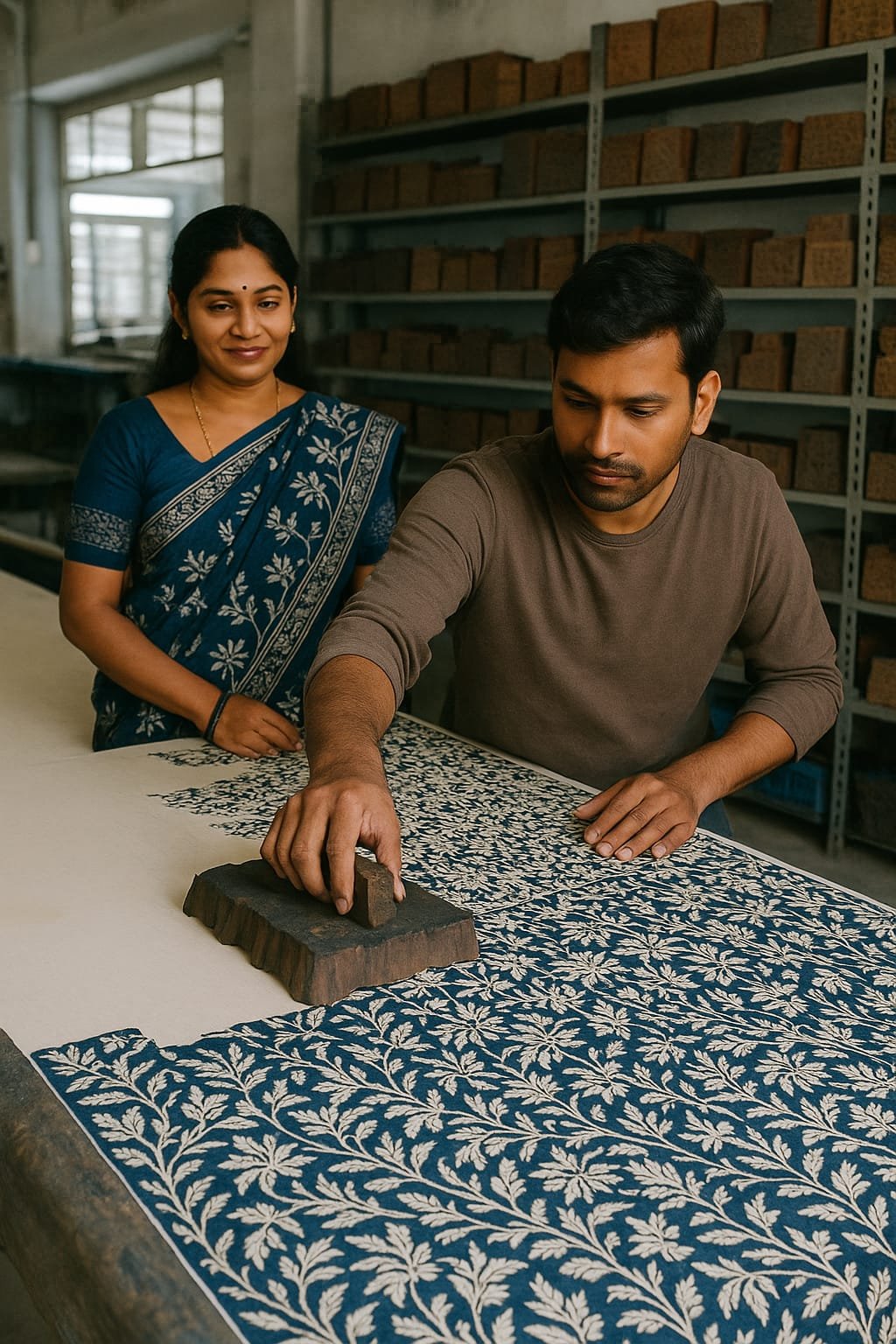
Inside our factory where master artisans work with natural dyes and carved wooden blocks to create authentic Ajrakh prints
Common Variations in Ajrakh Patterns
While the 16-step process remains constant, master artisans create numerous variations by:
- Using different carved wooden blocks with unique geometric patterns
- Varying the number of dye dippings for different color intensities
- Combining multiple natural dyes to create unique color palettes
- Adjusting the resist technique to create subtle differences in pattern appearance
- Creating custom designs based on customer preferences while maintaining traditional methods
Each variation requires the artisan to recalibrate temperatures, dye strengths, and timing. This is why no two authentic Ajrakh sarees are exactly identical—each is a unique creation of the artisan's skill.
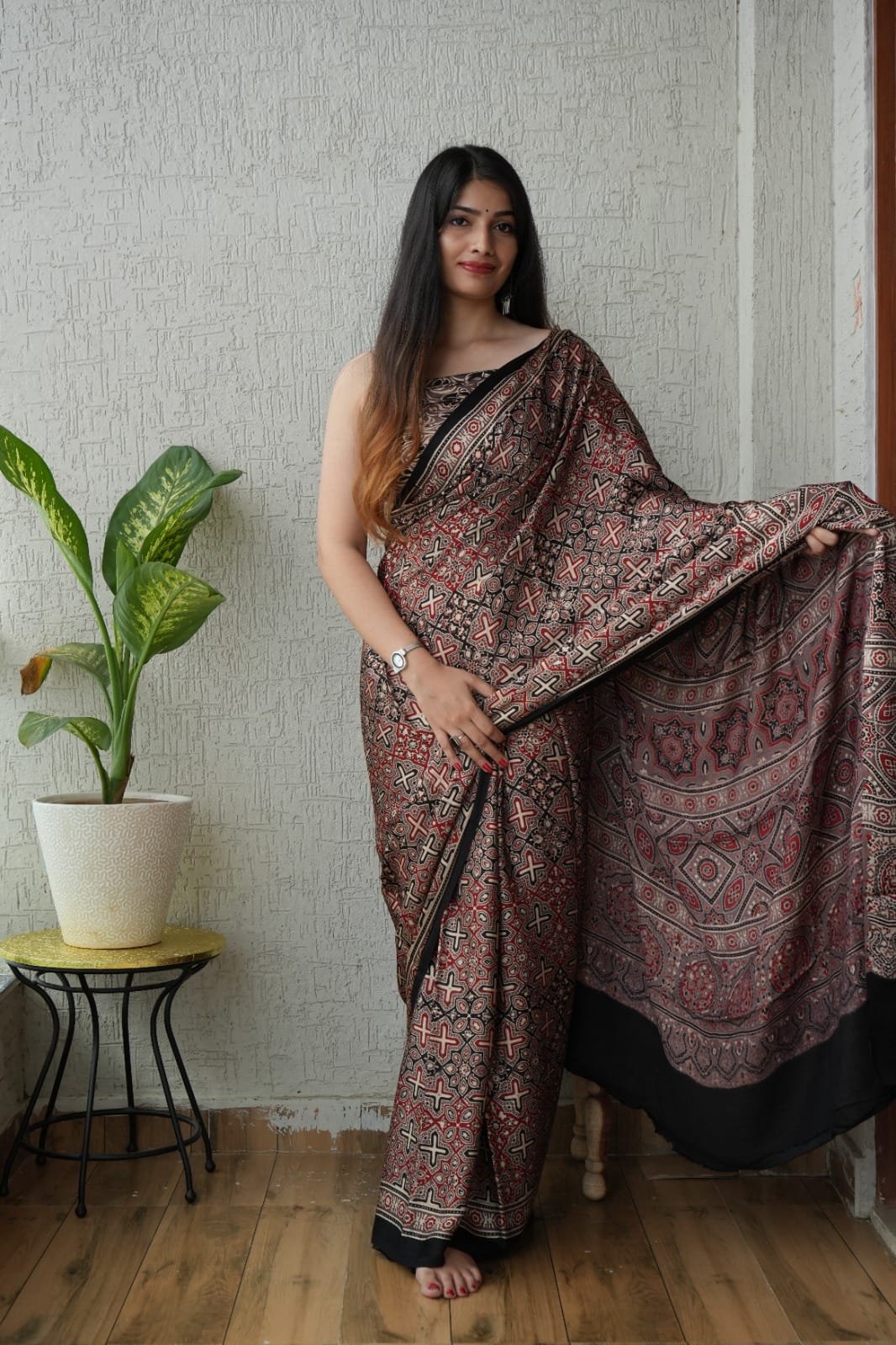
Kutch Ajrakh style showcases the geometric precision and color depth achieved through the complete 16-step process
Why Authentic Ajrakh Demands Premium Positioning
After understanding these 16 steps and the incredible skill involved, it becomes clear why authentic hand block printed Ajrakh modal silk sarees are premium products:
- Time investment: Each saree requires 4-6 weeks from start to finish
- Skill requirement: Only master artisans can execute this technique correctly
- Material quality: Premium imported modal silk as the base fabric
- Natural dyes: Expensive, rare natural dyes from sustainable sources
- Unique character: Each piece is genuinely one-of-a-kind due to hand block technique
- Longevity: Properly cared for, these sarees last for generations as heirlooms
Experiencing Ajrakh: A Sensory Journey
When you hold an authentic Ajrakh modal silk saree, you experience more than just a beautiful garment:
- The fabric weight: Premium modal silk has a substantial, luxurious feel
- The color depth: Natural dyes create colors with multiple tones and subtle variations
- The pattern uniqueness: The slight variations in each hand block print reveal the artisan's touch
- The heritage: You feel connected to centuries of textile tradition
Join Our Community of Ajrakh Appreciators
Experience Authentic Ajrakh Directly
Stay updated with our latest Ajrakh collections and behind-the-scenes artisan stories. Chat with us on WhatsApp to see new designs and understand the craftsmanship behind each piece.
Join our WhatsApp update group to receive exclusive previews of upcoming Ajrakh collections before they're released to the public.
Are you a boutique owner or reseller interested in offering authentic Ajrakh sarees? Connect with us about wholesale Ajrakh collections and learn how to bring premium artisan pieces to your customers.
Care Instructions for Your Ajrakh Modal Silk Saree
After understanding the 16-step creation process, proper care becomes essential:
- Dry cleaning only: Professional dry cleaning preserves the natural dyes and hand block print clarity
- Avoid direct sunlight: Natural dyes fade more easily than synthetic dyes when exposed to prolonged sunlight
- Storage: Store in cool, dark conditions wrapped in cotton cloth, not plastic
- Handling: Always handle with clean, dry hands to prevent staining the delicate natural colors
Supporting Artisan Heritage Through Your Choices
Every time you choose an authentic hand block printed Ajrakh modal silk saree, you are making a conscious decision to support:
- Master artisans and their families in Bagru
- Sustainable, eco-friendly dyeing practices
- Preservation of ancient textile techniques
- Ethical, fair manufacturing practices
- Quality over quantity in the fashion industry
This is why authentic Ajrakh sarees from reliable suppliers are not just garments—they are investments in heritage, art, and the survival of traditional craftsmanship.

The subtle color variations visible in natural dye Ajrakh come from the organic nature of plant-based dyes
Next Steps: Your Ajrakh Journey
Whether you're a customer looking to own an authentic Ajrakh saree or a business wanting to offer premium artisan pieces, the journey starts with understanding the craftsmanship involved.
Ready to explore authentic Ajrakh modal silk sarees?
Chat with us on WhatsApp to browse our collection, ask questions about the artisans behind each piece, and find the perfect Ajrakh saree for you or your boutique.
Learn more about our manufacturing heritage in Bagru and our commitment to supporting master artisans. Explore our complete modal silk saree collection or visit our showroom for a personal experience.
Chat with us on WhatsApp | Email us | Visit our showroom